
The Google Map Pack (also called the Local Pack or 3-Pack) is the boxed set of three local business listings Google shows above organic results when a search has local intent. Winning a spot in it is the biggest prize in local search. And here’s the catch: every market you serve decides its own winners.
That last part is what most guides skip. Almost everything written about Map Pack SEO assumes one business, one listing, one city. At 50, 200, or 500+ locations, the game changes. Local rankings stop being a marketing task and become an operations problem. Who owns the listings? What standard must every profile meet? How fast does every review get answered?
In this blog, Tyler Phillips, Creative Marketing Manager, covers the basics fast, then gets into the system. The playbook comes from managing local presence for hundreds of brands at Rallio. Run marketing for a franchise or a multi-unit brand? This is the guide the rest of the search results didn’t write for you.
What You’ll Learn:
- What Is the Google Map Pack?
- Why It Matters for Marketing Pros
- Google Map Pack vs. Organic SEO
- How to Rank in the Google Map Pack
- Advanced Tactics for Boosting Your Google Map Pack Ranking
- Measurement and ROI for Tracking Google Map Pack Performance
- FAQs
What Is the Google Map Pack?
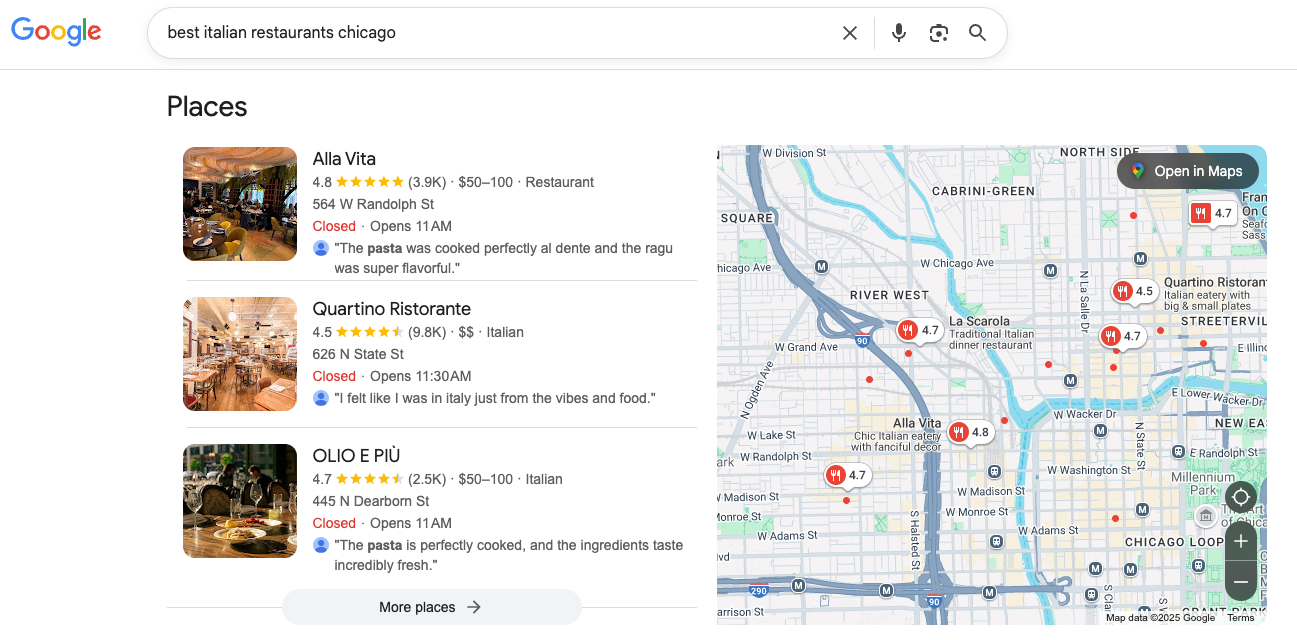
When a user wants to find a local business near them, they’re likely to enter certain “near me” keywords and other locally targeted queries. Let’s say someone wants to find a good Italian restaurant in Chicago, in which case the user would enter “best italian restaurants chicago.”
Here, Google would likely bring up the top three restaurants in the 3-Pack Google results, appearing above all other organic results. They could also show up in Google 3-Pack ads rather than organic results.
These three results would show the business name, average ratings from Google Reviews, addresses, business hours, a review blurb, and a location on a Google Maps embed.
Why It Matters for Marketing Pros
The Google Local Map Pack matters for marketers for several key reasons.
For example, getting a placement in Google 3-Pack ads and organic results can significantly increase your company’s visibility and credibility. People are more likely to trust businesses showing up at the top, especially if they have a lot of good reviews, and these placements tend to maximize visibility in mobile search.
Because this feature tends to connect with people toward the bottom of the sales funnel who are ready to visit or otherwise engage with a business, businesses with these placements will be more likely to increase calls and foot traffic.
How Much Local Business Does the Map Pack Actually Capture?
Here’s the honest answer: most published numbers are borrowed or unsourced. We won’t repeat them as fact. Here’s what the evidence actually supports, and where it runs out:
- Industry estimates credit the Map Pack with 40–60% of local search clicks. Be careful with that range: the figures vary by study, and none trace back to a primary source. Treat it as a rough signal, not a measurement.
- Google’s classic 2016 study found that 76% of people who search on smartphones for something nearby visit a business within a day. Newer public Google and BrightLocal research continues to show that local discovery, reviews, and search strongly influence store visits and purchase decisions, though not with the exact same measurement
- Google’s own data shows people are 70% more likely to visit a business with a complete Business Profile. They’re also 50% more likely to consider buying from it.
The pack sits above every organic result and catches buyers at their moment of highest intent. For a multi-location brand, that leverages compounds, which is why Map Pack SEO pays off more at scale than anywhere else. It also gets harder. At scale, the Map Pack is an operations problem wearing an SEO costume. One location can wing it. Two hundred locations need governance.
That means one owner for the listings and one standard every profile meets. It means one deadline for review responses, and one dashboard that catches the location whose hours drifted after a remodel. Google scores each location on its own signals. A brand doesn’t compete in one Local Pack, it competes in hundreds at once. So your win rate depends on your worst-managed listing, not your flagship.
My Expert Opinion on the Google Map Pack
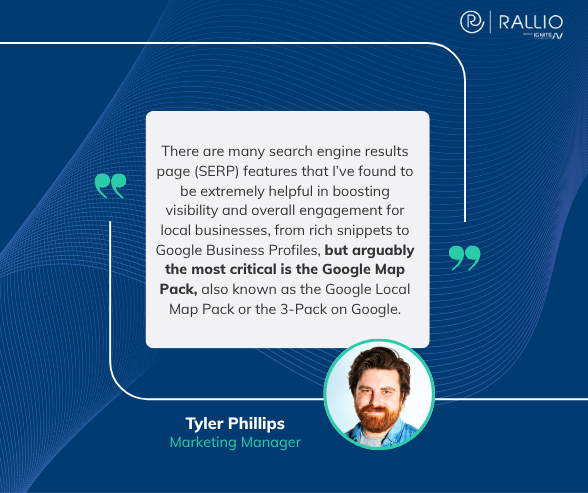
There are many search engine results page (SERP) features that I’ve found to be extremely helpful in boosting visibility and overall engagement for local businesses, from rich snippets to Google Business Profiles, but arguably the most critical is the Google Map Pack, also known as the Google Local Map Pack or the 3-Pack on Google.
The statistics of being top 1-3 in Google Map Packs really illustrate their importance, with recent reports concluding that the top Map Pack position has an average click-through rate (CTR) of 17.6%, while positions two and three see average CTRs of 15.4% and 15.1%, respectively. The CTR dramatically drops off after this.
Taking the right steps to rank for this component can help local businesses reach high-intent users who are actively looking to do business with local companies in their area, landing businesses in the top results above all other organic results.
While organic local SEO is still crucial in capturing audiences at every stage of the customer journey, optimizing for Google Place SEO can help you land these top three spots.
Let’s explore how you can stay on top of the Local Pack rotation on Google and how this feature works.
Google Map Pack vs. Organic SEO
Here is a breakdown of the differences between the Google Map Pack and organic SEO: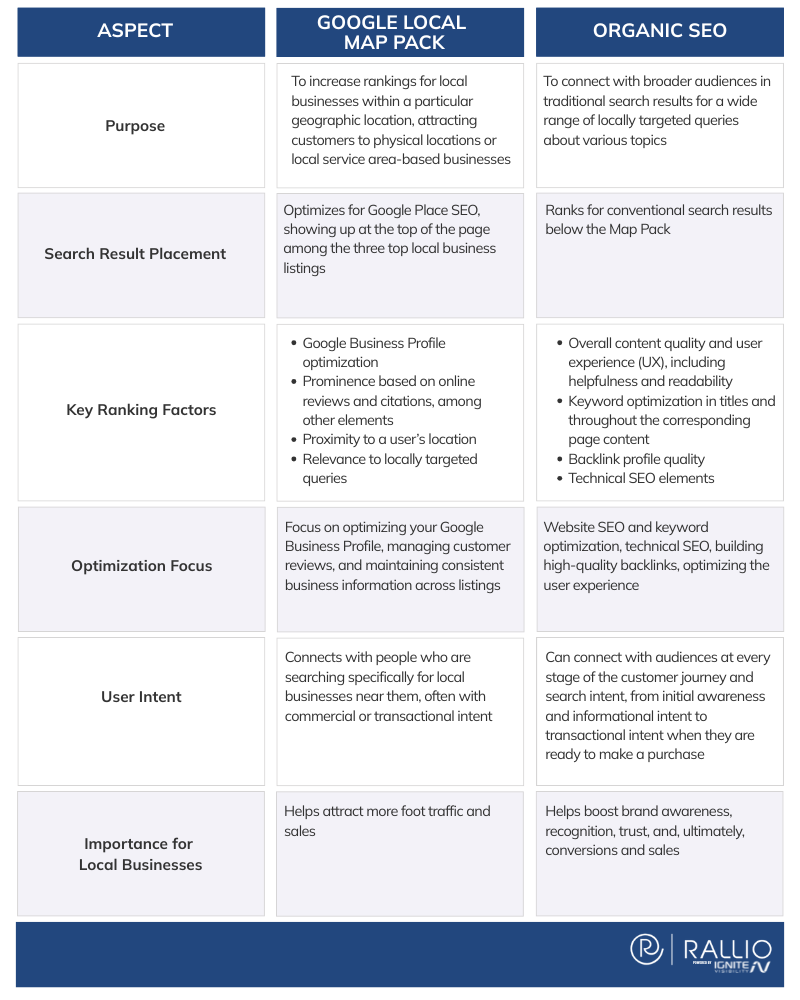
How to Rank in the Google Map Pack
Google determines Map Pack rankings based on three core signals:
- Relevance – how well your business matches the search query
- Proximity – how close your business is to the searcher
- Prominence – how well-established and trusted your business appears online
Let’s take a look at some of the ways you can improve your ranking and start getting noticed!
Google Business Profile Optimization
Your Google Business Profile is the single most important asset for Map Pack visibility. Unverified profiles have severely limited visibility, so start by claiming and verifying your listing.
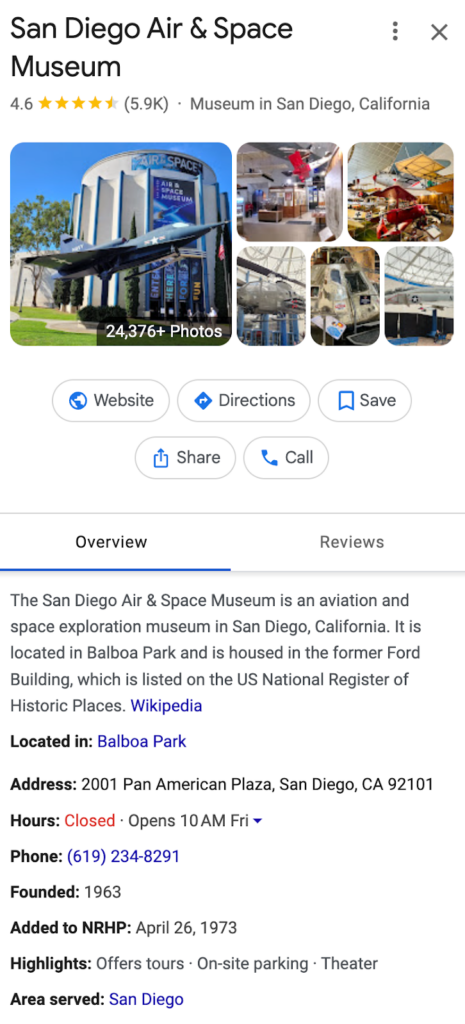
From there, complete every available profile field:
- Primary and secondary categories
- Services
- Business hours
- Attributes
- Photos
- Keyword-informed business description
Accuracy matters as much as completeness. Make sure all important information is up to date and correct. Outdated hours, wrong addresses, or mismatched information send negative signals to both Google and potential customers.
Treat your GBP as a living profile that requires regular attention, not a one-time setup task.
Reviews and Ratings
Reviews are one of the strongest signals Google uses to evaluate local rankings. Businesses with a high volume of recent, high-quality reviews consistently outperform competitors with fewer or older ones.
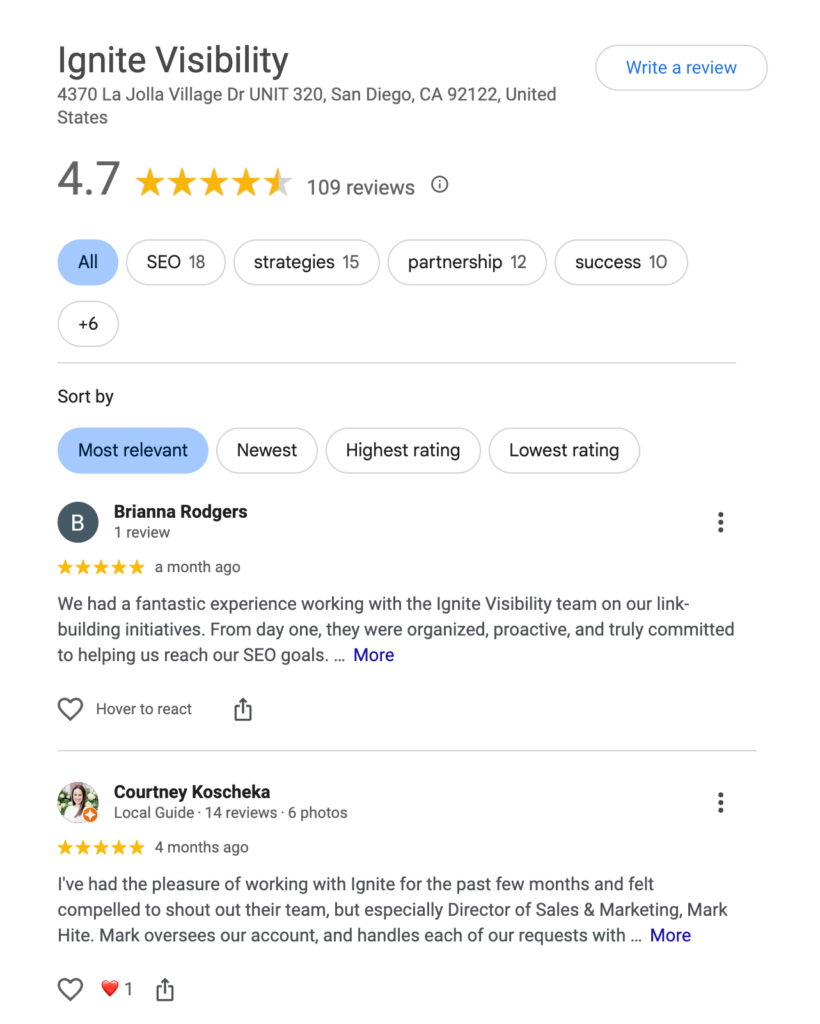
Build a systematic process for encouraging customers to leave reviews and make it a habit across every location in your network. You can do this through post-visit email sequences, SMS follow-ups, or in-store prompts.
Equally important is consistently responding to reviews. Be sure to respond to both positive and negative reviews, as this shows Google and your prospective customers, that your business is active, engaged, and taking your customer experience seriously.
Local Citations and Consistency
A local citation is any online mention of your business’s Name, Address, and Phone number (NAP). Consistency across citations on directories like Yelp, Apple Maps, Bing Places, and dozens of industry-specific platforms is an important part of a strong local SEO foundation.
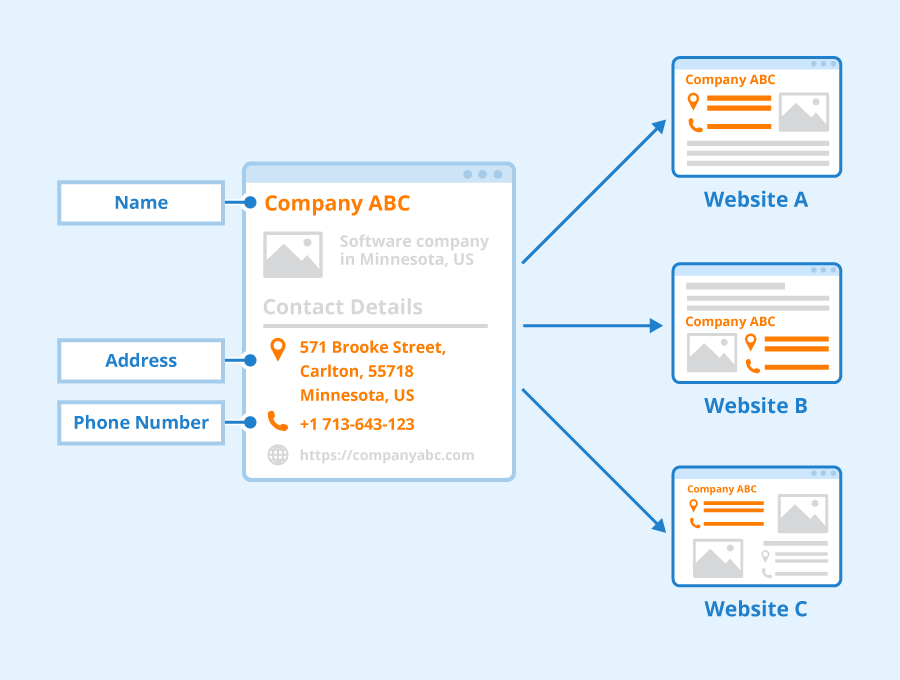
If your NAP information is inconsistent or conflicting, it will confuse search engines and dilute your local authority. Audit your existing citations regularly, correct any inaccuracies, remove duplicate listings, and ensure that every directory reflects your current business information.
For multi-location brands, this process needs to be managed systematically across every location, not handled manually on a case-by-case basis. With tools like Rallio, you can do this quickly and easily.
On-Site Local SEO
Your website plays an important role in improving your local SEO and Google Map Pack ranking. Create dedicated, keyword-optimized landing pages for each location that include locally relevant content, the location’s NAP information, embedded Google Maps, and structured data markup (Schema) that helps Google understand your business’s geographic relevance.

Optimize page content for local search intent, or the specific queries your customers type when they’re ready to visit or buy. A well-structured local landing page doesn’t just support Map Pack rankings. It will also help to convert the traffic those rankings generate.
Backlinks and Local Authority
Google loves it when other websites link to or mention your business. This shows that your content is authentic and trustworthy.
Earning backlinks from locally relevant sources such as community organizations, local news outlets, regional industry associations, and partner businesses builds the kind of local authority that strengthens Google Map Pack rankings over time.
Sponsoring local events, participating in community initiatives, and building relationships with other local businesses are all effective ways to generate organic mentions and links that signal credibility to Google. They’re also a great way to capture candid photos and images that look great for your GMB and social media channels!
Proximity
Proximity is the one ranking factor you can’t fully control. Google will always prioritize businesses that are geographically closest to the searcher’s location at the time of the search.
However, proximity is not the only factor, and a well-optimized profile can meaningfully expand your visibility into surrounding areas where proximity alone wouldn’t place you. Businesses with strong relevance and prominence signals regularly appear in Local Pack rotation on Google beyond their immediate vicinity. This is why investing in every other ranking factor is so critical, especially for brands competing in densely populated or highly competitive local markets.
Map Pack SEO vs. Organic Local SEO: How Businesses Are Displayed on Google Search and Maps
Search and Maps display businesses differently, and the Local Pack is where the two meet. Map Pack, Local Pack, 3-Pack, and Google Maps results all describe the same feature. So Map Pack SEO and Local Pack SEO are the same work. And it plays by different rules than organic.
|
Map Pack / Local Pack |
Organic local results |
|
|
What ranks |
A Google Business Profile (per location) |
A page on your website |
|
Primary signals |
Relevance, distance, prominence |
Content, links, technical SEO |
|
Where it appears |
Above organic, plus Google Maps |
Below the pack |
|
Best for |
“Near me” and high-intent local queries |
Research and comparison queries |
|
Multi-location unit of work |
Every listing, individually |
Every location page, individually |
Traditional SEO alone can’t win local intent. But dropping it starves the pack of its supporting signals. The Whitespark survey scores every factor for both result types, and the two lists barely overlap: GBP factors top the pack side; on-page and links top organic. The #1 local organic factor? A dedicated page for each service. Brands that run listing plus location page as one program, in every market, beat brands that pick a side.
Can You Rank in the Map Pack Without a Physical Address?
Yes, a service-area business (SAB) can rank in the Google Map Pack without showing a physical address. Set the profile up as a service-area business, hide the address, and define the areas you serve. Plumbers, landscapers, mobile services, and home-service franchises do this every day. Two honest caveats. Google still computes distance, from your hidden address or service area. And in crowded markets, a hidden-address SAB usually fights uphill against storefronts with equal signals (Whitespark’s experts rank a visible address #7 of 187 pack factors. Everything else in this guide) reviews, categories, services, landing pages, applies to SABs unchanged. Local Pack SEO for a service-area business uses the exact same levers. That makes the signals you control matter more, not less.
Paid Ads and Other Advanced Tactics for Boosting Your Google Map Pack Ranking
If you need some additional help managing your Google Map Pack optimization efforts, agencies could help with more complex campaigns in the following ways:
- Multi-Location Grid Tracking: An experienced local SEO agency could help track the performance of several locations through location groups and comprehensive tracking.
- Service-Area Business Nuances: The right agency could also account for service-area business nuances, such as targeting specific areas without a physical address, encouraging more people to call or otherwise reach out to your business for home services and other service-based industries.
- Google Posts and Q&A Usage: Regularly making Google Posts and building your GBP’s Q&A section can help you continually refresh your local SEO. Google Posts can include blog posts, event or industry updates, and other content, with links back to your site in clear CTAs, while a Q&A section can answer critical questions about your business and offerings without requiring people to go to an FAQ section on your site.
- Demonstrate E-E-A-T on your website: Real author pages, location-specific content, first-hand photos, and visible operator expertise tell the same trust story on your site that reviews tell on your listing. Google’s E-E-A-T framework applies to local, too.
- Show up where AI search looks: Whitespark’s survey now scores what gets a business seen in AI search. The #1 AI visibility factor: presence on expert-curated “best of” lists. Mentions without links (local news stories, blog features, industry roundups) rank close behind. In AI search, the report argues, mentions are the new link. For a multi-location brand, that means earning press and list placements market by market, not just for the flagship. The same listing-review-page system that wins the pack feeds those AI answers, too.
- Paid Map Ads and Extensions: To further boost your rankings and maximize visibility, you can link your GBP to your Google Ads account and use Google 3-Pack ads on Google Maps as well as certain extensions.
Measurement and ROI for Tracking Google Map Pack Performance
To ensure you continue to dominate Map Pack rankings, you must regularly monitor and measure your campaigns and make any necessary changes.
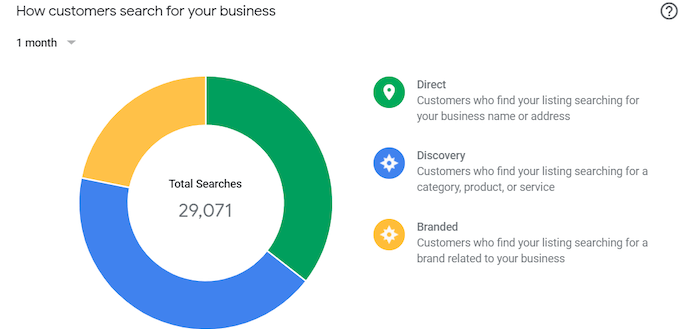
You can track your performance using GBP Insights, for example, which can indicate the number of calls and direction requests you have received through your profile.
Some SERP tracking tools, such as Semrush, Ahrefs, and Moz Pro, can keep track of your rankings for certain local keywords, including terms like “best [business] near me” and other terms that bring up Google Map Pack results.
Using your SEO tracking tools, you can differentiate between local organic and Map Pack performance, helping you figure out which aspects to optimize based on performance for each. For instance, you might discover that your traditional organic rankings are dropping, in which case you could improve your website’s technical SEO, while a disappearance from the top 3 Map Pack results might require some additional GBP optimization.
When tracking, monitor attribution to help you better understand where your traffic and conversions are coming from, measuring visits, conversions, and revenue.
FAQs
1. What is the Google Map Pack?
The Google Map Pack is the set of three local business listings, shown with a map, that Google displays above organic results for searches with local intent. The Google Map Pack is also known as the Google Local Pack, the 3-Pack, or Google Maps results.
2. How do I get my business in the Google Map Pack?
A business gets into the Google Map Pack by creating and verifying a Google Business Profile. Ranking then comes from completing every profile section, choosing accurate categories, and keeping name-address-phone data consistent across the web. Steady reviews and a location-specific landing page finish the job.
3. What factors affect Google Map Pack rankings?
Multiple factors impact rankings for the Map Pack, including your Google Business Profile, reviews and ratings, local citations, on-site local SEO, backlinks, and the proximity of your business to people searching for your offerings or brand.
4. Can service area businesses rank without an address?
Yes, even if you don’t have a physical address, you can rank for the Google Map Pack by targeting local audiences with a GBP and locally targeted SEO efforts. People could then call your business or contact you online to schedule services.
5. How do reviews impact Map Pack placement?
Google Reviews are essential for Google Map Pack rankings because these results include an aggregate rating. The higher your business is rated on Google, the higher you are likely to rank and increase your chances of appearing in the top 3 results.
6. Can I pay to be in the Google Map Pack?
No, placement in the organic Google Map Pack cannot be purchased. Businesses can buy Google Maps ads and Local Services Ads that appear near the pack, but the three organic Map Pack positions are earned through relevance, distance, and prominence.
7. Should I update my GBP (Google Business Profile) often?
Yes, a Google Business Profile should be updated at least weekly. Fresh posts, new photos, current hours, and prompt review responses all signal an active business. Profile freshness is a working routine, not a one-time setup.
Take Control of Your Google Map Pack Ranking with Rallio
Winning one Map Pack takes discipline. Winning hundreds takes a system — and that’s what Rallio is. Map Pack SEO across a whole footprint needs one place to:
- Keep every location’s listings and citations accurate with Directory Listings management
- Watch and answer reviews across every platform, fast, from one dashboard
- Publish on-brand, locally tuned social content that builds the branded demand Google rewards
- See listing, review, and engagement performance across all of your locations at once
If you searched for help with local SEO services, review management, or listing management, this is that, systematized. Join the hundreds of brands that trust Rallio with their local presence. Request a demo and we’ll walk your own locations’ data with you.
Are you ready to join the 500+ brands who have trusted us to improve their online reputation? Reach out to get started with Rallio today!

Tyler Phillips is a Creative Marketing Manager at Rallio | Powered by Ignite Visibility, with over seven years of experience in SaaS and social media marketing and more than sixteen years in online video production. Known for his creative thinking and innovative problem-solving, Tyler specializes in designing and executing strategic digital advertising and content marketing campaigns. His passion lies in bridging creativity and data—turning complex ideas into simple, impactful brand narratives that connect, engage, and inspire.